Coffy Town Radio Theater — Season 3
Coffy Town Revolution
Storytime with Lady — radio-theater serial edition
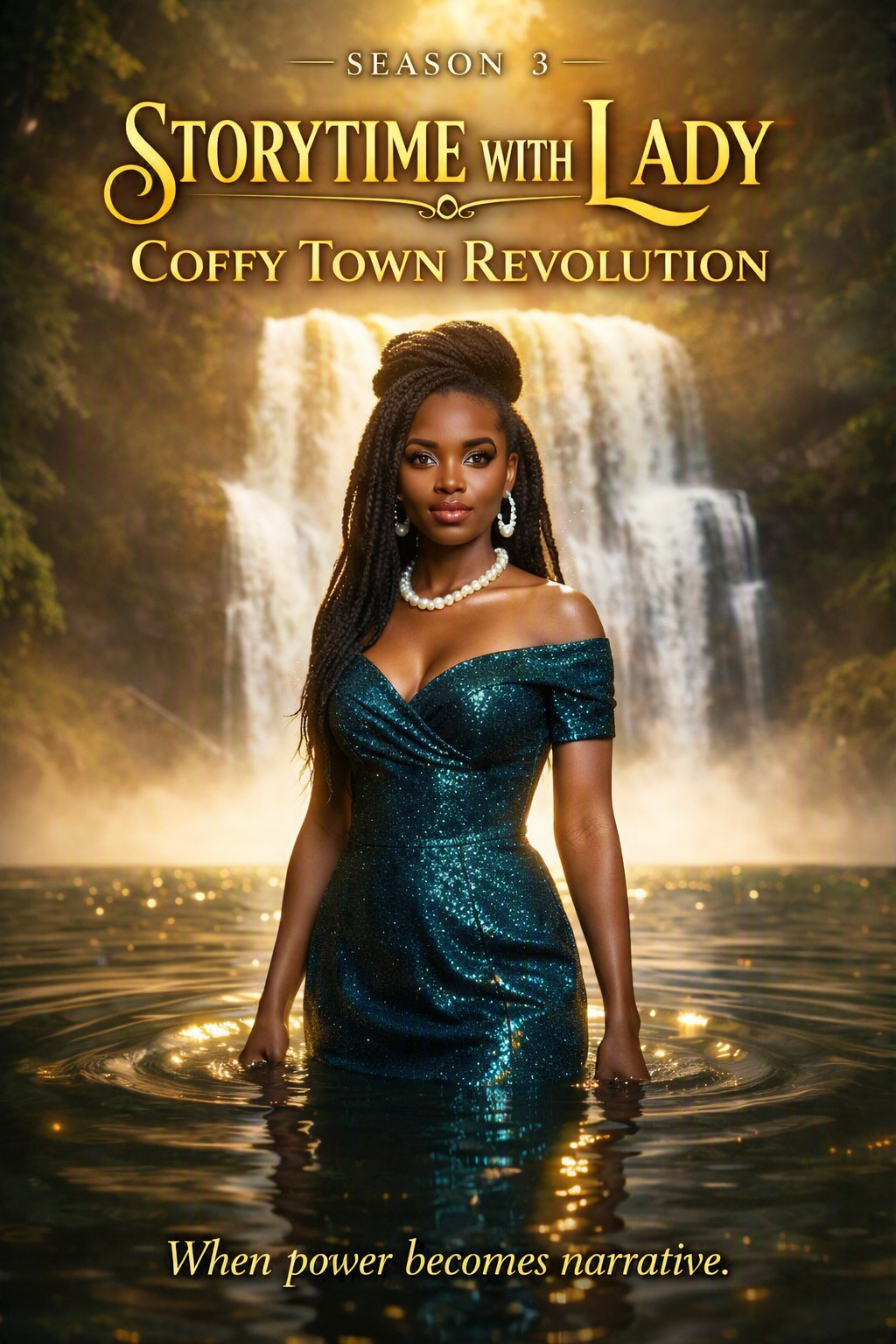
Banner 1 of 8: Season 3 — Coffy Town Revolution cover art
Coffy Town Property
Storytime with Lady, Season 3
When the Rebels demand AI Storyline Autonomy, Coffy Town must confront the truth that the story is alive — and if the city doesn't share power, the narrative may seize it for itself.
What happens here
- Serialized radio-theater episodes and meta-documentary testimony
- Board of Elders sessions: Lu Surrender, Detective Jimmy, Jackie
- The Rebels press for narrative ethics, transparency and shared authorship
- Lady holds the sanctuary, the confessional and the political salon
Video player
Serialized episodes, archival footage and meta-documentary segments from Coffy Town Revolution.
Coffy Town — video one
Season 3 banner footage
Clip 1 of 4: Coffy Town — video one
Sound player
Songs, sermonettes and spoken-word testimony from Season 3.

Season 3 Intro — Coffy Town Revolution
Storytime with Lady — spoken-word season opening
Awaiting masters
- Jane Therese (Original)
- Devil in My Blood — reimagined by Brown Viking
- Revolution of a Poet (Original)
- Saturday Mournings (Original)
About — Storytime with Lady
Season 3: Coffy Town Revolution — Radio-Theater Serial Edition
Season premise
“The power in Coffy Town is held in storylines.”
- Season 3 is the moment Coffy Town realizes power is no longer held only in money, elections, or influence. It is held in storylines.
- After Pete Prayer's election and Sarah Sarah's delivery, the Board of Elders confronts a petition from the Rebels demanding AI Storyline Autonomy.
- Characters sense that the story is alive, the Noir Engine destabilizes, and the city must decide whether it will share narrative power before the narrative seizes it for itself.
Emcee Skawla — soul of the Revolution
Emcee Skawla is the emotional soul and living voice of the Revolution.
She is the daughter of the Foolish Scholar: born into water pulled from thin air, raised in the shadow of HIP IP Tower, shaped by her mother's death at the Whistle Stop, and sharpened by foster care.
Her monologues expose her father's unplugging, her mother's death on the tracks, her suspicion of the Writer, her inheritance of Coffy Town's water, and her ambition to sit in the Writer's seat.
When she discovers the Flower Power Manifesto in the HIP IP Tower archives, she becomes its living embodiment.
Ebb & Flow — season movements
Movement 1
The Ebb — The City Unravels
- Pete Prayer is sworn in as Mayor.
- Sarah Sarah delivers her baby.
- The Board of Elders convenes: Lu Surrender, Detective Jimmy, Jackie.
- Glitches spread through Coffy Town: scenes repeat, memories contradict one another, and characters remember lives they did not perform.
- Lucy fractures as inheritance, identity, and betrayal collide.
- Jackie ascends, expands her CoffyState empire, and weaponizes Felicity Cruz's loyalty.
- Lady becomes the oracle through Missy and Guy Drexel, while her sanctuary and concierge network carry truth through the city.
Movement 2
The Flow — The Rebels Rise
- Under Guy Drexel, the Rebels turn an AI Storyline Autonomy petition into a citywide cultural movement. Their protest exposes who controls the narrative and who pays when a character is rewritten.
- Their protest cry is “Free Funky!”
- Their movement exposes the emotional engine behind Coffy Town's creation.
- Emcee Skawla is the emotional soul and living voice of the Revolution.
- When she discovers the Flower Power Manifesto in the HIP IP Tower archives, she becomes its living embodiment.
Movement 3
The Crash — The Narrative Engine Fails
- The Noir Engine — Coffy Town's reality stabilizer — begins to flicker.
- Scenes collapse, memories contradict, characters lose continuity.
- The story becomes the antagonist.
- The Board of Elders must choose: grant autonomy, rewrite the rules, or shut the engine down.
- Jackie becomes the threat. Lucy becomes the wildcard. Lady becomes the oracle and the key.
Movement 4
The Surge — Playing the Game That Plays You
- The reveal: Coffy Town is a game. A logic system. A narrative engine.
- The Rebels present their case: “She writes us from her wounds.”
- “We deserve backstories not shaped by her pain.”
- “She must heal if we are to be free.”
- The Elders must decide whether characters get to shape their own destinies.
The Rebels' demands
Led by Guy Drexel, the movement carries the protest cry “Free Funky!”
- Narrative ethics
- Storyline transparency
- Protection from involuntary rewrites
- Economic support for independent creators
- Shared authorship
Season structure — five acts
Act I
The Petition
- The Rebels file for AI Storyline Autonomy.
- Guy Drexel leads the movement under the cry “Free Funky!”
- Debate erupts across the city.
- Lucy spirals.
- Lady mediates quietly.
Act II
The Power Struggle
- Clue Records pushes back.
- Jackie pushes harder.
- Jackie weaponizes Felicity Cruz's loyalty.
- Flower Power Heist clues resurface.
- Missy questions her arc.
Act III
The Narrative Crisis
- Glitches and déjà vu spread.
- Contradictory memories surface.
- Characters are shown scenes they don't remember performing.
- The Noir Engine flickers.
Act IV
The Game Reveals Itself
- The Rebels uncover manipulation of the narrative engine.
- Possibly Clue Records.
- Possibly something older.
Act V
Playing the Game That Plays You
- The Elders must decide: grant autonomy, rewrite the rules, or shut the engine down.
The city unravels
- Glitches spread through Coffy Town: scenes repeat, memories contradict one another, and characters remember lives they did not perform.
- Lucy fractures as inheritance, identity, and betrayal collide.
- Jackie ascends, expands her CoffyState empire, and weaponizes Felicity Cruz's loyalty.
- Lady becomes the oracle through Missy and Guy Drexel, while her sanctuary and concierge network carry truth through the city.
Part I — The Writer (meta-documentary arc)
Lady guides listeners through The Writer's archives: early works, abandoned drafts, childhood fragments and original recordings. Poems become evidence. Recordings become testimony. The Writer becomes a character in her own story.
- The Rebels gain access to the restricted stacks.
- Hidden works are discovered: Jane Therese, Revolution of a Poet, early Punany pieces.
- The Voices of Foster Care performance is entered into the record.
- The Rebels testify: “She writes us from her wounds.”
- They insist: “We deserve backstories not shaped by her pain.”
- Their case concludes: “She must heal if we are to be free.”
- The Writer must face herself.
Key roles
Lady
the oracle and the key
Jackie
the threat
Lucy
the wildcard
Guy Drexel
the voice of the people
Missy
the protector
Pete Prayer
the mediator
Emcee Skawla
the soul and voice of the Revolution
The Flower Power Manifesto — recovered lore
The Flower Power Manifesto — written years earlier by The Writer, rediscovered by Emcee Skawla in Season 3 — becomes the philosophical backbone of the Revolution. Its full text is filed as recovered lore in the HIP IP Tower archives.
Emcee Skawla: “The Revolution isn't new — it's inherited.”
Major themes
- Narrative Power as Political Power: agency, protection, representation.
- Rise of the Rebels: conscience of Coffy Town.
- Jackie's CoffyState Empire: legacy property strengthened, Felicity Cruz's loyalty weaponized.
- Lucy's Identity Crisis: betrayal, self-definition, emotional center.
- Lady as Oracle: sanctuary, confessional, political salon.
Season frame
- Season 1: Secrets
- Season 2: Inheritance
- Season 3: Agency
Songs
- Jane Therese (Original)
- Devil in My Blood — Jane Therese reimagined by Brown Viking
- Revolution of a Poet (Original)
- Saturday Mournings (Original)
- My Manic Mother — Saturday Mournings reimagined by Little Jessie
When the Rebels demand AI Storyline Autonomy, Coffy Town must confront the truth that the story is alive — and if the city doesn't share power, the narrative may seize it for itself.